An Introduction To Precision Farming

THIRD MODERN FARMING REVOLUTION
The world is at the edge of the third modern farming revolution and Precision farming is an important part of it. The first revolution that occurred from 1900 to 1930s, mechanized agriculture leaving each farmer being able to produce enough for 26 people. Long after that it was the 1990s when the second revolution known as Green revolution took place. Due to scientific progression genetically modified newer set of crops that are pest resistant and needed less water were introduced , leaving each farmer being able to feed 155 people. Global population is expected to reach 9.6 billion by 2050 and food production must be double of the current levels to feed every person. Advanced analytical capabilities and constantly improving IoT will be key elements in third revolution, making each farmer capable of feeding 256 people.
Popular definitions of Precision Agriculture (PA), Satellite Farming or Site Specific Crop Management (SSCM) describe the term as ‘a technology-enabled approach to farming management that observes, measures, and analyzes the needs of individual fields and crops’. According to McKinsey, the development of precision agriculture is shaped by two trends: “Big Data and Advanced Analytics Capabilities, and Robotics — aerial imagery, sensors, sophisticated local weather forecasts”. In simple words farming that collects and uses data of plots for managing and optimizing the production of crops is known as Predictive farming.
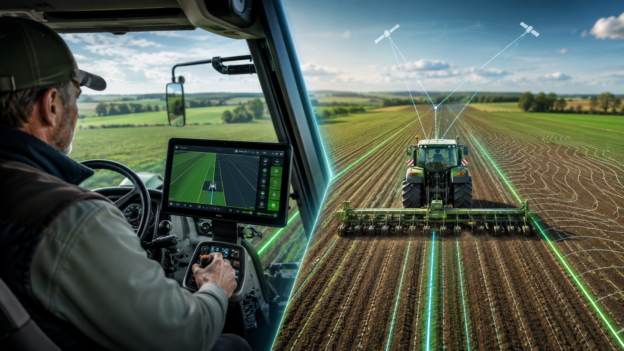
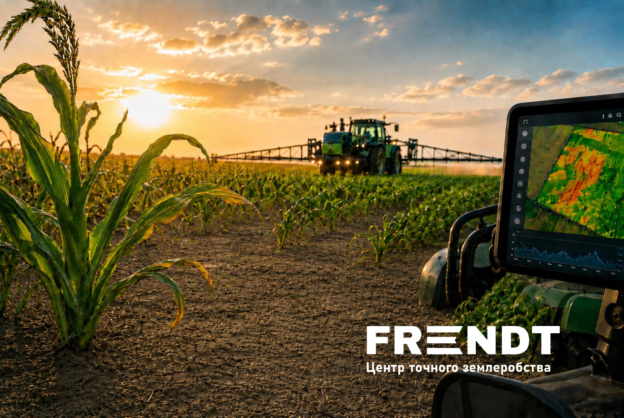
Predictive farming is analogous to taking a pill to target an ailment. The solutions are highly tailored from the type of crop suitable for a plot to the use of pesticides in targeted regions only. Adopting to Precision farming reduces the production cost and wastage, as tailored needs of each plot is catered to. Precision farming is practised by adopting analytical software and use of technical equipment. Rigorous data collection is done on soil testing, plot measurement, weather pattern analysis and crop analysis through sensor equipped devices placed along the fields. The data is calibrated to devise conclusions and based upon those results a very detailed and precise set of practices can be adopted.
NEED FOR PRECISION FARMING
In developing economies, 32 percent of food losses occur during food production as analysed by McKinsey on FAO data.
Conventional farming practices are area-centric. There is a general set of crops cultivated throughout an area. All the farmers in that area follow the same procedures with respect to sowing, nourishing, irrigation and harvesting period. What these practices result in is: unpredictability, overuse of resources and uncontrolled waste production.
Before the use of tech in agriculture, a farmer’s probability of yielding good produce was as good as tossing a coin and wishing for heads. Since farmers had no information on their farms, there was no way of learning the causes for crop loss. This practice pushed the farmers towards losses and debt. Advancements in big data analytics, IoT and accessible satellite imagery created optimism for the agriculture sector, thereby combating the issue of unpredictability.

FAQs
- What tools do I have to adapt to Precision farming?
Precision farming focuses on reducing the production cost and wastage, as tailored needs of each plot is catered to. It centres on data collection and analysis of farmpIots which comprises of sensors, drones and robots for recording the data and software as a service (SaaS) can be used to adapt to Precision farming.
Although IoT is still at a nascent stage, the governments of agriculture dominant economies do invest in cutting-edge technologies like IoT, AI and Machine Learning for making smarter agriculture solutions. In agri-based economies like India, the implementation of IoT in agriculture has its own set of unique benefits and challenges. Firstly, the farmers fear upgrading to agtech as they lack the knowledge about the applicability of technology in agriculture.
Besides this, the sensors, robots and drones that are used in the development of IoT solutions are expensive, high maintenance and require technically trained labor for operating them. The data collected needs to be analysed – this can be done by taking them to a lab or by using instruments on farm. Also a variety of sensors are required for collecting data on different parameters which needs to be analysed separately, hence making them high budget. Therefore, the solution must be cost-effective and highly scalable, considering the various sizes of farms.

- Can Digital Economy Help Agriculture?
The recent rapid digitalisation has reduced the exhaustive paper work in banks, hospitals and most private and public sector organizations seems to diminish as their businesses move online. Digitisation has reduced the manual work – which was time consuming, error prone and inefficient – thus saving millions for corporations. Digitization of the economy has broken the barriers and has successfully curtailed the fear of tech dependency especially among the farming community. Digitalisation is slowly also revolutionising the vast and complex Agriculture sector.
The United Nations projects that by the year 2050 the population of the world will be 9.7 Billion. With relevance of over 60 percent of world population on agriculture for food, the pressure to increase the produce to meet demands doesn’t seem to ease. Coupled with climate change, which is leading to rise in global temperatures, levels of carbon dioxide and frequency of droughts and floods, along with increasing labor costs, high production cost, and unpredictability poses a major challenge to the future of agriculture. Hence, the goal is to increase productivity in a sustainable way.

Original article: https://www.cropin.com/precision-farming/