Abnormal Heat in Ukraine: How Extreme Temperatures Are Affecting Crops Across the Country’s Key Agricultural Regions
July 2026 is expected to become one of the hottest months Ukraine has experienced in recent years. According to the Ukrainian Hydrometeorological Center, the average monthly air temperature is forecast to range between 21.8°C and 26.0°C – approximately 2°C above the long-term climatic average, while some regions may experience anomalies of up to 3°C. Meteorologists predict a high probability of prolonged heatwaves, with daytime temperatures remaining consistently above 30°C for several consecutive days or even weeks, making mid-summer the hottest period of the season.
The heat will be accompanied by a significant rainfall deficit. Most regions are expected to receive only 60–75% of their average monthly precipitation, while parts of southeastern Ukraine may receive even less. The country’s major agricultural regions – the Steppe and Forest-Steppe zones, including Dnipropetrovsk, Zaporizhzhia, Kharkiv, Odesa, Mykolaiv, Kherson, Kirovohrad, Poltava, Cherkasy, and Vinnytsia regions – are expected to be the hardest hit. These regions account for a substantial share of Ukraine’s grain, oilseed, and industrial crop production, making the combination of extreme heat and drought particularly threatening to national agricultural output.
For crops such as corn, sunflower, soybean, and sugar beet, which are currently in their active vegetative growth stages, these conditions represent severe physiological stress. Specialists at FRENDT have analyzed the situation and prepared practical recommendations that can help farmers minimize potential losses.
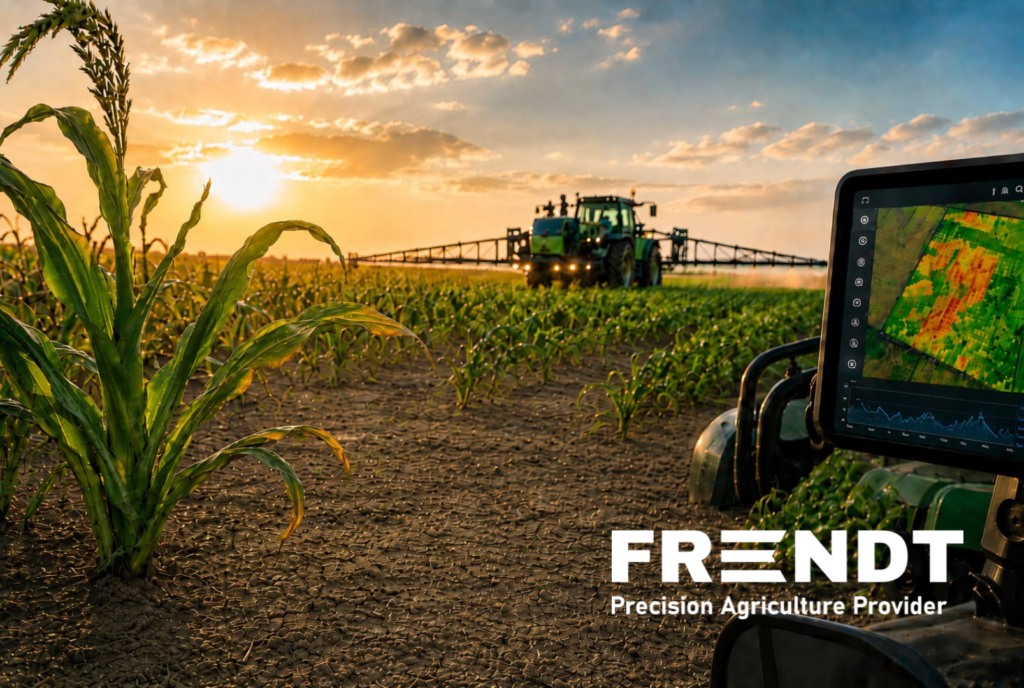
What Happens to Plants During Prolonged Heat?
When air temperatures remain above 30°C for an extended period, plants switch into survival mode. Their stomata – microscopic pores on the leaf surface responsible for regulating moisture loss – begin to close. While this mechanism reduces water evaporation and helps prevent dehydration, it also severely restricts photosynthesis. Without open stomata, carbon dioxide cannot enter the leaf, significantly reducing nutrient assimilation and biomass accumulation.
If extreme heat coincides with critical crop development stages – pollination in corn, grain filling in cereals, or pod formation in soybeans – the consequences may become irreversible. Corn pollen begins losing viability at temperatures around 35°C, resulting in poor kernel set and partially filled ears. In sunflower, high temperatures during flowering reduce seed formation within the head, while sugar beet experiences slower sugar accumulation in the root under heat stress.
The situation becomes even more critical when high temperatures coincide with limited rainfall, exactly the scenario forecast for July. Elevated temperatures accelerate capillary evaporation from the upper soil layers, while plant root systems struggle to compensate for the increasing moisture deficit. This is the classic pattern of drought stress, responsible for reducing crop yields in Ukrainian agriculture every year.
The Main Risks This Month
Beyond directly affecting plant physiology, extreme heat also dramatically reduces the efficiency—and sometimes even the safety—of routine field operations.
Daytime spraying becomes virtually ineffective.
Applying crop protection products at 35°C is essentially a waste of money. Spray droplets often evaporate before the active ingredients can be absorbed by the plant. The optimal temperature range for spraying is 15–25°C. Most crop protection products lose effectiveness at temperatures above 25°C, while applications below 10°C are also significantly less efficient.
Increased herbicide stress.
Applying pesticides to crops already weakened by heat may result in severe phytotoxicity. Heat-stressed plants recover much more slowly from chemical stress, and if this occurs during a critical growth stage, it can lead to measurable yield losses.
Accelerated soil moisture depletion.
As mentioned above, high temperatures intensify capillary evaporation from the upper soil profile. The longer the heatwave persists, the more difficult it becomes to restore moisture within the root zone—even after rainfall returns.
FRENDT’s Action Plan : Protecting Yields with Precision Agriculture Technologies
As climate conditions become increasingly extreme, precision farming and data-driven decision-making are no longer optional—they are essential, regardless of where a farm is located.
1. Shift Field Operations to Nighttime—with Maximum Precision
Since daytime fieldwork becomes largely ineffective during heatwaves, nighttime provides the only practical window for applying anti-stress products, micronutrients, and remaining crop protection treatments, when temperatures typically fall to around 20°C.
However, operating machinery in darkness without precise guidance increases the risk of skips and overlaps.
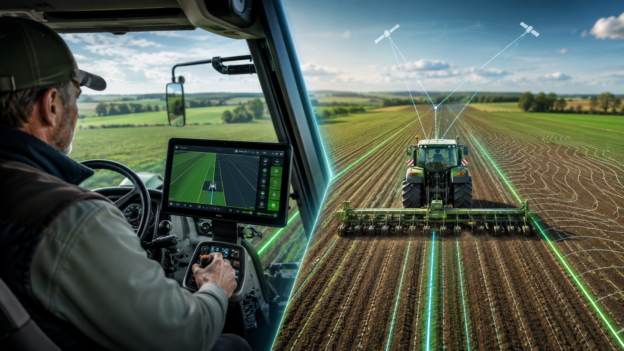
Ag Leader autosteer systems combined with FRENDT’s RTK network enable tractors and sprayers to operate at 2.5 cm accuracy throughout the night. This minimizes operator fatigue while ensuring perfectly aligned passes and uniform application exactly when conditions are safest for the crop.
2. Target Weeds Without Additional Stress on the Crop
During prolonged heat, weeds develop a thicker waxy cuticle, making them significantly more resistant to conventional herbicide applications. Simply increasing herbicide rates often harms the crop more than the weeds, particularly when crops are already under severe heat stress.
The Ecorobotix ARA intelligent spraying system solves this challenge through Plant-by-Plant precision spraying. Using artificial intelligence, it identifies individual weeds and treats only the target plants, reducing herbicide consumption by up to 95% while leaving the crop untouched and avoiding unnecessary chemical stress.
3. Monitor Fields 24/7 with FlyAgData
During extreme weather events, decisions cannot rely on assumptions. Farmers need accurate, real-time information identifying which fields are suffering the most from drought and where NDVI vegetation indices are declining most rapidly.
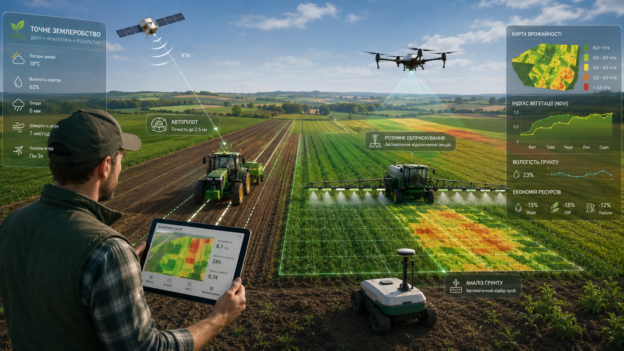
The FlyAgData telematics platform collects data directly from onboard machinery computers and field moisture sensors, providing continuous, real-time insights for every field. This enables growers to adjust management plans immediately instead of waiting until crop stress becomes visually apparent—often when the damage has already become irreversible.
4. Measure Soil Compaction and Apply Inputs Where They Matter Most
Dry, hardened soil retains even less of the limited moisture remaining after prolonged heat. Measuring soil compaction allows farmers to identify the areas requiring immediate attention.
Where irrigation or foliar nutrition is available, Variable Rate Application (VRA) maps developed from previous yield data help allocate resources precisely where they will deliver the greatest return instead of applying the same rate across the entire field.
Why Field Data Matter More Than Regional Weather Forecasts
National weather forecasts provide only general guidance. In reality, crops respond to the microclimate of each individual field—and often even to different areas within the same field.
Farms in the Steppe regions, such as Dnipropetrovsk or Zaporizhzhia, experience heat and drought more frequently than farms in the Forest-Steppe. However, this does not mean every field responds the same way. Two neighboring fields may react very differently to the same heatwave depending on soil type, topography, previous crops, and available soil moisture.
That is why agronomic monitoring and field-specific data become more than analytical tools during extreme heat—they become critical factors directly influencing final crop yields, whether a farm is located in Poltava, Kharkiv, Odesa, or any other agricultural region of Ukraine.
How Can Farmers Adapt to Increasingly Extreme Weather?
The current heatwave serves as another clear reminder that the climate has fundamentally changed, and traditional approaches to planning field operations are becoming less reliable every year.
Farms that have already invested in autosteer systems, RTK guidance, and precision spraying technologies are navigating these extreme periods far more successfully. By working at night, reducing input waste, and making decisions based on real-time field data rather than regional averages, they can significantly reduce weather-related risks.
Don’t wait until the next heatwave in July or August causes additional yield losses. Contact the FRENDT team today. We will help you upgrade your machinery, connect to Ukraine’s most accurate RTK network, and implement data-driven farm management solutions that prepare your fields for whatever temperature records the future may bring.