From Degraded Land to Bioenergy: The Miscanthus Case
More than 2 million hectares of Ukrainian land currently require restoration. Part of this land is no longer suitable for conventional agriculture but can become the foundation of a new bioenergy economy.
Ukraine today faces the need to rethink approaches to land use in response to a complex set of challenges, ranging from soil degradation to the need for energy resilience and economic recovery. Under these conditions, efficiency extends beyond traditional agricultural production and takes on a systemic dimension.
This context creates the prerequisites for transforming the role of land and introducing new approaches to its use.
Transformation of the Agricultural Model: A New Role for Land
Ukraine’s agricultural sector is entering a phase of structural transformation in which traditional concepts of efficiency are losing their defining role. Whereas productivity was once determined by scale and intensity, the decisive factor today is the ability to integrate multiple land-use functions into a single system. Land is no longer a monofunctional resource; it simultaneously serves as an economic asset, an energy source, and an environmental buffer, shaping a new logic of agricultural production in which not only yield matters, but also the creation of added value.
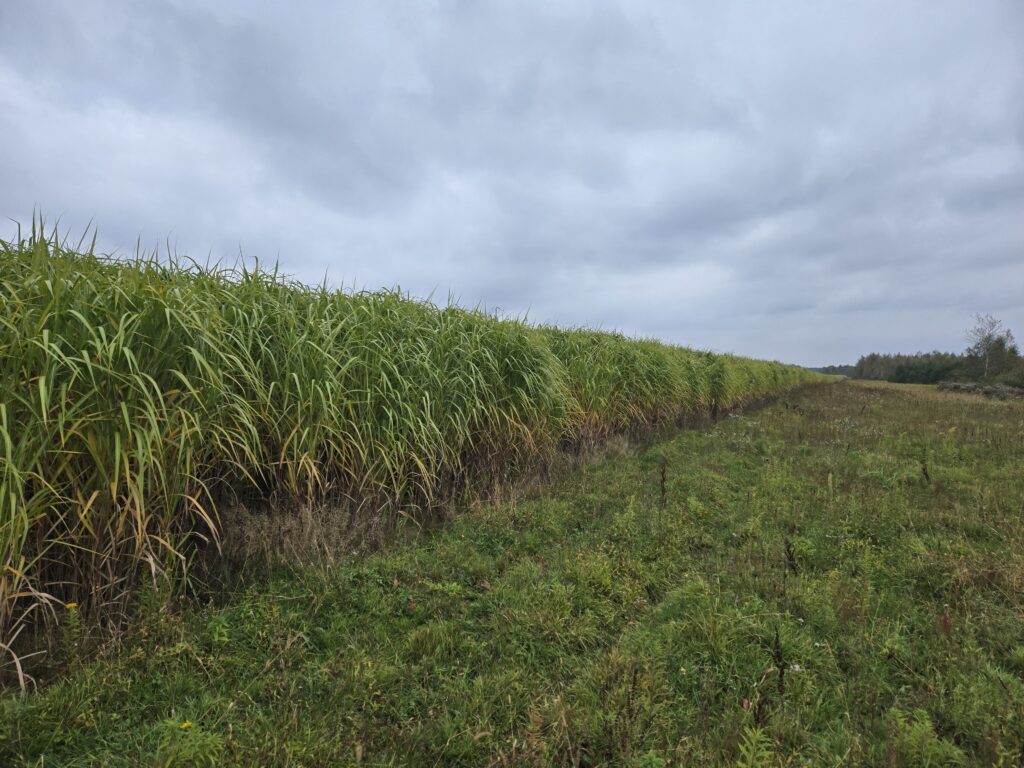
In this context, miscanthus is not merely a crop but a strategic tool for agribusiness. Once established, a field remains productive for years, requiring minimal intervention while ensuring a stable biomass yield. Its perennial nature reduces tillage costs, while its resilience enables efficient use of less productive land. At the same time, miscanthus provides a resource that can easily be integrated into energy and industrial processes, from biofuels to processing industries. In effect, it serves as a bridge between agriculture and green energy, offering not only a harvest but also a stable feedstock supply, predictability, and new opportunities for business diversification.

Challenges in Ukraine as a Catalyst for Innovation
The challenges currently facing Ukraine are accelerating the transition to a new model. Significant areas of agricultural land have been degraded or contaminated as a result of military activities. According to estimates, approximately 2 million hectares require restoration.
At the same time, the country faces the need to ensure energy independence, particularly at the community level. Centralised energy systems have proven vulnerable, increasing demand for decentralised solutions. In this context, there is a need for tools capable of simultaneously:
- restoring degraded land;
- generating economic value;
- ensuring energy autonomy.
Miscanthus meets all of these criteria, making it not merely an alternative but a strategically necessary solution.
Bioenergy Potential: Building a New Economy
One of the key characteristics of miscanthus is its versatility. Biomass can be used for:
- pellet production for local heating;
- feedstock for biogas plants;
- electricity generation;
- production of environmentally friendly construction materials.

This enables the creation of diversified value chains, reducing risk and improving the economic resilience of projects.
At the same time, the environmental impact strengthens its economic attractiveness. According to industry studies, miscanthus can absorb approximately 3.5 tonnes of CO₂ per hectare annually, while emissions associated with its cultivation amount to only about 0.7 tonnes. This creates a significant positive carbon balance.
In the future, this opens opportunities for integration into carbon credit markets and international climate initiatives.
Phytoremediation: Balancing Environmental Responsibility and Profitability
A key feature of miscanthus is its ability to grow on land unsuitable for conventional agriculture. The plant effectively performs phytoremediation, a natural process of cleaning soil, water, or even air through the use of plants, gradually removing contaminants and restoring soil structure.
This creates a fundamentally new economic model in which:
- soil restoration is not a cost center;
- degraded land becomes an asset;
- environmental processes are integrated into business activities.
Such an approach shifts the paradigm of agriculture from resource exploitation to resource restoration and regeneration.
MERIT Project: An Integrated Model for Recovery and Development
The most comprehensive example of this approach is the international MERIT project (Miscanthus Energy for a Resilient and Inclusive Transition), funded by the UK Foreign, Commonwealth & Development Office (FCDO) and UK International Development through the Innovate Ukraine programme.
With a budget of £2 million, MERIT demonstrates not only the scale of investment but also the level of confidence in bioenergy solutions as a recovery tool.
MERIT is based on three interconnected principles:
- reintegration of degraded land into economic use through energy crops;
- creation of sustainable value chains focused on bioenergy and biomaterials as a pathway to Ukraine’s energy independence;
- integration of digital technologies for managing complex agricultural systems.
Within this model, miscanthus provides a stable biomass supply for more than 20 years without replanting, creating long-term production predictability.
Project Consortium and Implementation Approach
The project is being implemented by an international consortium of partners from the United Kingdom and Ukraine.
The lead UK partner is Terravesta, a provider of biomass supply chain solutions. Liverpool John Moores University contributes expertise in agronomy and phytoremediation.
The Ukrainian consortium includes Miscanthus Technology, responsible for biomass cultivation and processing, and FRENDT, responsible for remote monitoring and process automation.
The project aims to identify the miscanthus variety best suited to Ukraine’s challenging climatic conditions and capable of delivering high performance in local environments. To achieve this, extensive agronomic trials and agrochemical studies are being conducted.
As of May 2026, part of this work has already begun in four regions of Ukraine: Rivne, Zhytomyr, Vinnytsia, and Odesa. Several miscanthus varieties are being tested, while parallel studies are conducted in the United Kingdom to ensure comparability of results.
The project combines traditional agricultural practices with innovative technologies, including laboratory analysis, crop monitoring through agri-scouting and aerial imagery, precision application of crop protection products using the Ecorobotix ARA system, and other data collection and analysis tools for evaluating crop development under different conditions.
The Digital Dimension of the Project: The Role of FRENDT
FRENDT is responsible for managing large-scale agricultural data within the MERIT project. Its role extends far beyond conventional technical support.
For the miscanthus project, it is critical not only to establish demonstration plots but also to obtain comparable field data from different regions of Ukraine, document crop responses to soil and climate conditions, and develop a model that can be scaled to communities, farms, and industrial biomass supply chains.
In this regard, FRENDT acts as a digital operator. The company is responsible for implementing remote monitoring tools, collecting and analysing field data, providing technical consultancy, and adapting innovative solutions to Ukrainian conditions.
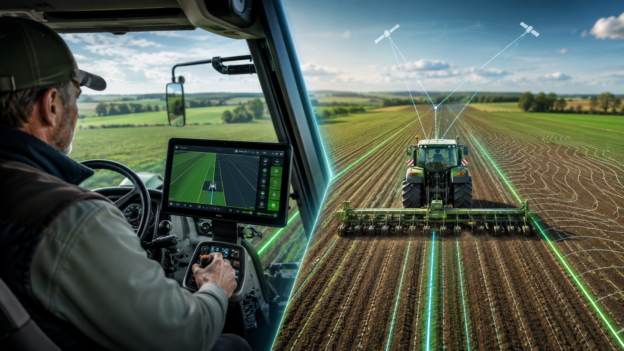
In practice, this includes creating digital field boundaries, using machinery-generated data, satellite and UAV monitoring, crop condition analytics, and standardising processes across different sites and regions.
FRENDT is one of Ukraine’s leading precision agriculture companies. Since 2013, it has positioned itself as a Precision Agriculture Centre, delivering comprehensive solutions ranging from machinery diagnostics, RTK navigation, autosteer systems, and machine retrofitting to agronomic consultancy, agrochemical analysis, GIS support, VRA maps, weather monitoring, and analysis of actual field terminal data.
This expertise enables the company to support the full cycle of digital farm transformation, from initial data collection to field-level management decisions.
Technology Adaptation: Localisation as the Key to Efficiency
The MERIT project demonstrates that simply copying European models does not deliver the required outcomes. The Ukrainian context requires technologies to be adapted to local conditions.
Field studies across multiple regions are helping identify:
- optimal miscanthus genotypes;
- effective planting technologies;
- cultivation specifics under different climatic conditions.
In this process, digital analytics becomes a tool for rapid knowledge accumulation and practical implementation.

An Integrated Model for the Future
An analysis of the MERIT concept and its projected outcomes leads to a bold yet increasingly convincing conclusion: the future of agriculture will be determined by the level of integration between different systems.
Miscanthus serves as the foundation of this model, while the participation of Ukrainian partners provides local expertise and a strong digital and analytical framework.
As a result, a new agricultural economy is already taking shape, where:
- land restoration is combined with energy production;
- environmental processes are integrated into business models;
- management is based on data rather than intuition.
Ultimately, this creates the conditions for the long-term sustainability and competitiveness of the agricultural sector while opening new opportunities for technological development.
Anna Slobodianiuk, FRENDT LLCRuslana Kravchenko, FRENDT LLC